
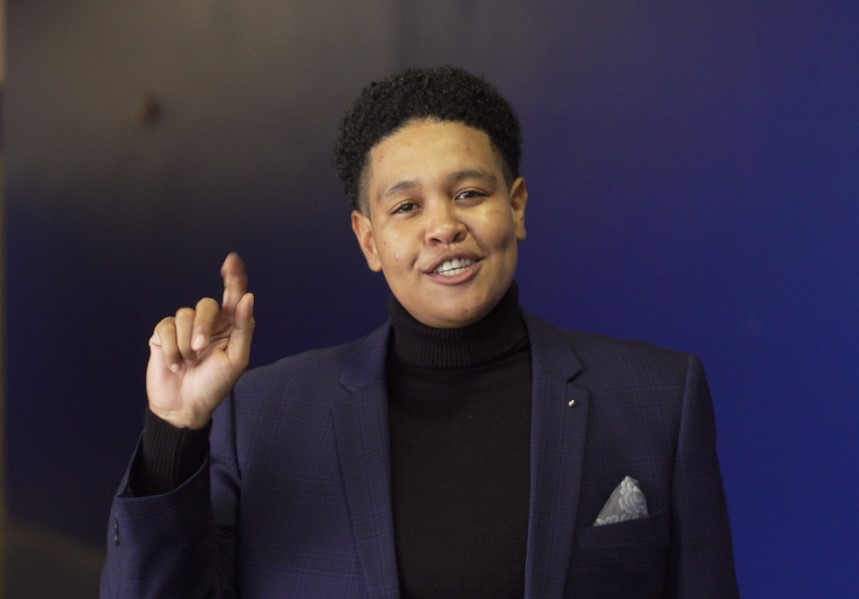
Veteran Jamaican Sign Language interpreter, Tony Aiken, is calling for stronger inclusion systems for the deaf community in Jamaica, stressing that accessibility is still far from where it needs to be across education, public events, and institutional spaces.
The parliamentary interpreter, who has served in the House of Parliament for 14 years, shared insights into the everyday challenges faced by deaf individuals, including communication barriers, limited access to interpretation services, and societal misunderstanding of deaf identity.
With an estimated 80,000 people in Jamaica’s deaf community, Aiken emphasized that exclusion is not a small issue.
“You don’t provide access for those people, so you’re leaving out a whole population of people,” she noted, highlighting the importance of communication support in public spaces.
The veteran interpreter also addressed misconceptions that continue to surround the deaf community, including harmful stereotypes. “Deaf is not dumb,” she said firmly, pointing to the need for greater public education and awareness.
Having grown up with deaf parents, Aiken explained that interpreting goes far beyond simply translating words. “I like to compare it to acting, the only thing I’m actually producing real-life work to what is being said,” she said, describing the role as one that requires emotional control, performance skill, and deep focus. She added that interpreters often have to “take on a role” and fully embody communication in real time, sometimes for hours at a stretch, before decompressing afterwards.
The issue of accessibility in institutions such as schools and public events was also raised. Aiken stressed the need for sign language to be formally taught in schools and for interpretation services to become standard at national events, not optional. She also reflected on how deaf individuals are often forced to rely on family members, including children, to navigate everyday tasks such as shopping or communication in public spaces.
On the question of technology, Aiken acknowledged its growing role but expressed caution about its limitations.
“Certain nuances in sign language that I don’t think AI won’t pick up. I do, however, think it’s possible to use it in certain situations, like in the airport, that’s constant. But like a deaf lady in the hospital giving birth, a deaf person in legal trouble, no, in the Houses of Parliament, no.”
Noting her non-opposition to technological advancements, sharing her view that it’s not a threat to her profession.
As Miss Aiken continues her work, she remains focused on visibility and inclusion for deaf individuals, reminding the public that deaf people “do normal things too” and deserve full participation in society, including access to entertainment, services, and public life.
Her message is simple but urgent. The deaf community needs more representation.